Translation
Translated from the Spanish source, which is the normative text. Status: draft pending human review. Differences are resolved in the Spanish text.
MILPA — Knowledge and provenance: the polyculture analogy
The milpa is an agricultural system of Mesoamerican tradition. Polyculture means growing several species in the same space. Here we select maize, beans and squash to explain knowledge structure, relationships and care. Milpa composition and management vary between regions and communities; this triad does not exhaust their diversity. CONABIO, The milpa.
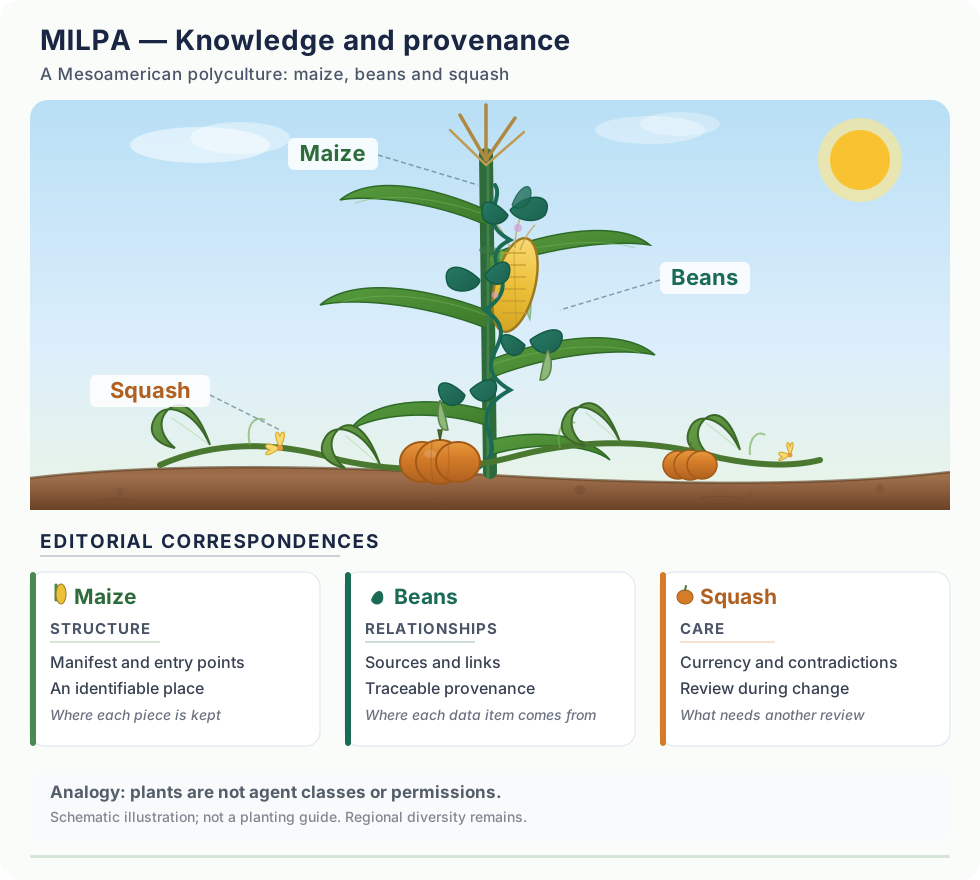
First, the agricultural image
Maize stalks can support climbing beans; squash leaves cover the soil and help retain moisture. These are agricultural relationships described by CIMMYT. Complementarity means that different parts provide functions that can work together. Competition, environmental conditions and human work also matter; coexistence does not guarantee results. CIMMYT, milpas and their relationships.
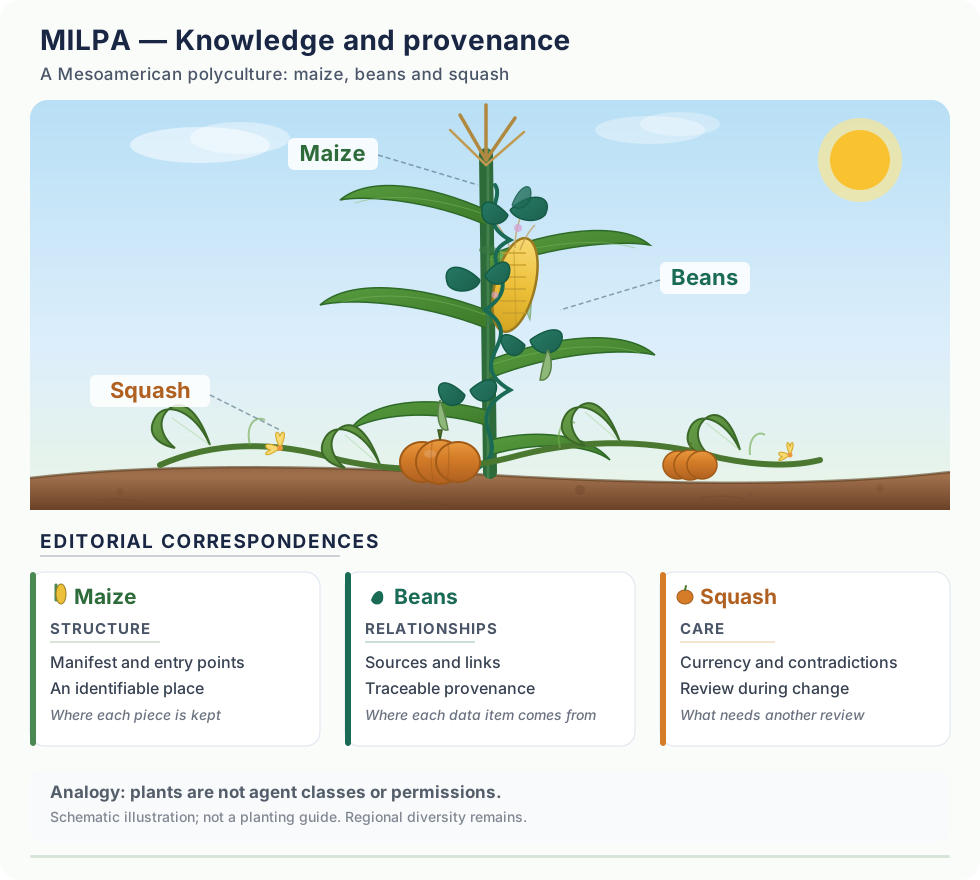
Open the SVG illustration. The drawing is schematic, not a planting guide. Names and the table make it understandable without distinguishing colours.
Then, the documentary correspondence
These correspondences are an editorial choice, not literal plant properties or new MILPA obligations. Each image helps readers remember a practice.
| Image | Editorial correspondence | Concrete practice |
|---|---|---|
| Maize | Structure: an identifiable place. | The manifest identifies purpose and responsibility; entry points and indexes make artefacts findable. |
| Beans | Relationships: traceable connections. | A claim links to its source; a link declares contract and version; a responsible person answers for the record. |
| Squash | Care: review during change. | Review currency, preserve contradictions and distinguish authority, certainty and exposure. |
Provenance is the identified origin of a claim or artefact. Currency states whether its revision remains applicable. A contradiction groups incompatible claims that remain available until a decision; a source is not removed to make agreement appear to exist.
Analogy diagram
flowchart TD
  accTitle: MILPA: polyculture correspondences
  accDescr: Three dashed arrows mark editorial analogies: maize, an image of structure, corresponds to manifest, entry points and indexes; beans, an image of relationships, to sources, links and responsible people; squash, an image of care, to currency, review and contradictions. Those three documentary practices converge on knowledge with place, provenance and status.
  M["Maize: image of structure"] -.->|editorial analogy| E["Manifest, entry points and indexes"]
  F["Beans: image of relationships"] -.->|editorial analogy| R["Sources, links and responsible people"]
  C["Squash: image of care"] -.->|editorial analogy| V["Currency, review and contradictions"]
  E -->|documentary practice| K["Knowledge with place, provenance and status"]
  R -->|documentary practice| K
  V -->|documentary practice| K
SVG diagram: MILPA: polyculture correspondences · Editable Mermaid source.
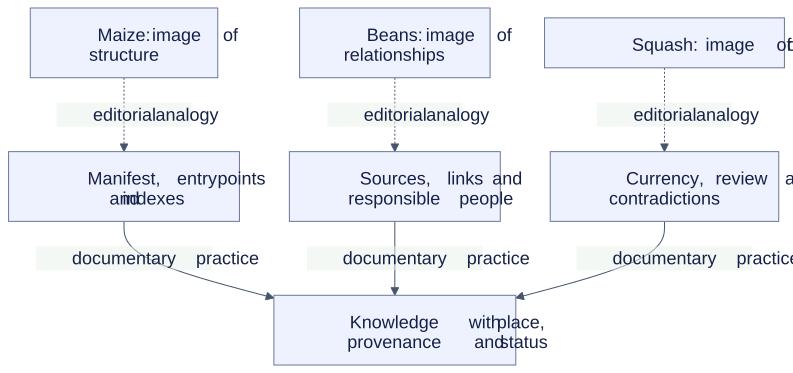
Solid arrows connect documentary practices with their intended purpose; dashed arrows mark editorial correspondences. They represent neither botanical flows nor permissions.
A small example
A fictional team proposes changing a report. Structure: it finds the current record and its owner. Relationships: it links the proposal to its source and identifies affected contracts. Care: it records the discrepancy, reviews the decision and retains the previous version. Evidence and the human decision come from records, not from the crop image.
Where the analogy stops
The plants do not represent people, agent classes, permissions, products or architectural layers. No crop creates authority, guarantees truth or proves collaboration. The agricultural tradition belongs to the communities that practise it; the methodology uses an explanatory comparison.
Continue with the library analogy, the manifest and MILPA requirements.